Murueta: Urban Planning “Á la carte!”
“When there was a museum, the shipyard was superfluous; when the museum disappeared, the shipyard became indispensable again. That’s not planning. That’s opportunism.”
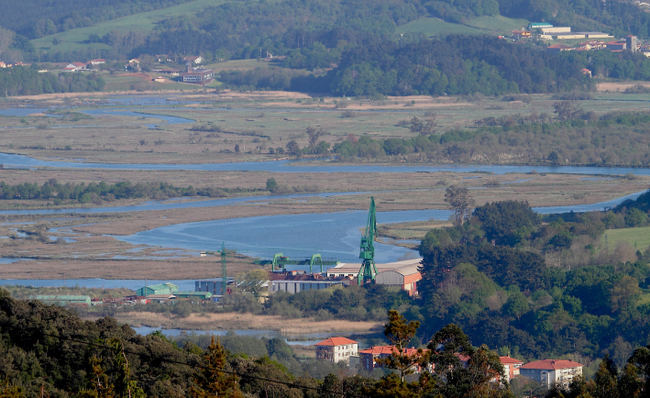
In Murueta, neither the value of the land, nor the legislation that protectsit, nor the environmental reality that defines it has changed. What has changed, strikingly, is the political discourse. And, more recently, something even more worrying: the attempt to rewrite it. Because with this new General Urban Development Plan (Deia, April 21, 2026), the Murueta Town Council maintains that the plan “does not respond to external projects. ”A statement that, viewed in isolation, might seem reasonable. The problem is that it comes after several years in which the urban planning was clearly conditioned by one very specific project: the Guggenheim Urdaibai. And that is where memory matters.
Murueta is not just any piece of land. It lies within the Urdaibai Biosphere Reserve, subject to regulations that clearly establish that environmental protection must take precedence over any urban development. This is not a matter of opinion; it is a legal obligation. And yet, in recent years, the municipality’s planning has been adapted with a flexibility that is difficult to justify from the perspective of the public interest.
When the revision of the General Urban Development Plan (PGOU) began in 2021, the official argument was adaptation to current regulations. Nothing to object to there. But one only needs to read the preliminary document itself to understand that there is more to itthanthat:themodificationoftheterritorial planning is directly linked to the expansion of the Guggenheim Museum in Gernika and Murueta. In other words, urban planning is not based on an independent reflection on the future of the municipality, but rather conditioned by a specific project.
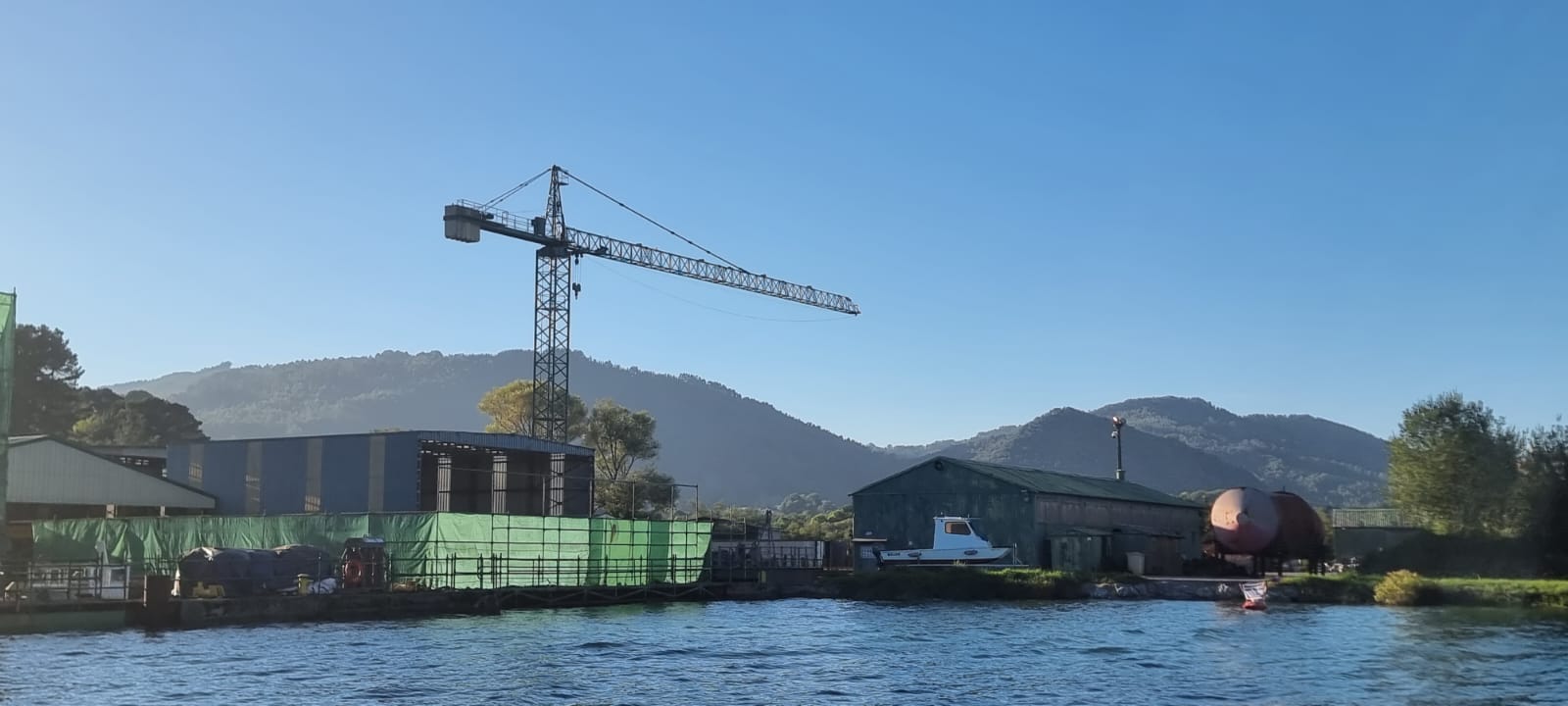
In this context, a key decision emerges: to change the zoning of the land occupied by Astilleros de Murueta SA, from industrial land to land for theservices sector . This was not a minor technical adjustment. It was the necessary condition for the museum to exist. Without this change, the project wasnotviable.Andso, planning ceased to be a tool for organization and became an instrument at the service of a specific operation. Along with this decision came a narrative: the shipyard was seen as something to be displaced, an inconvenient activity within the new model they intended to implement. The museum, on the other hand, was presented as an unquestionable strategic opportunity and a guarantor of restoration and decontamination.
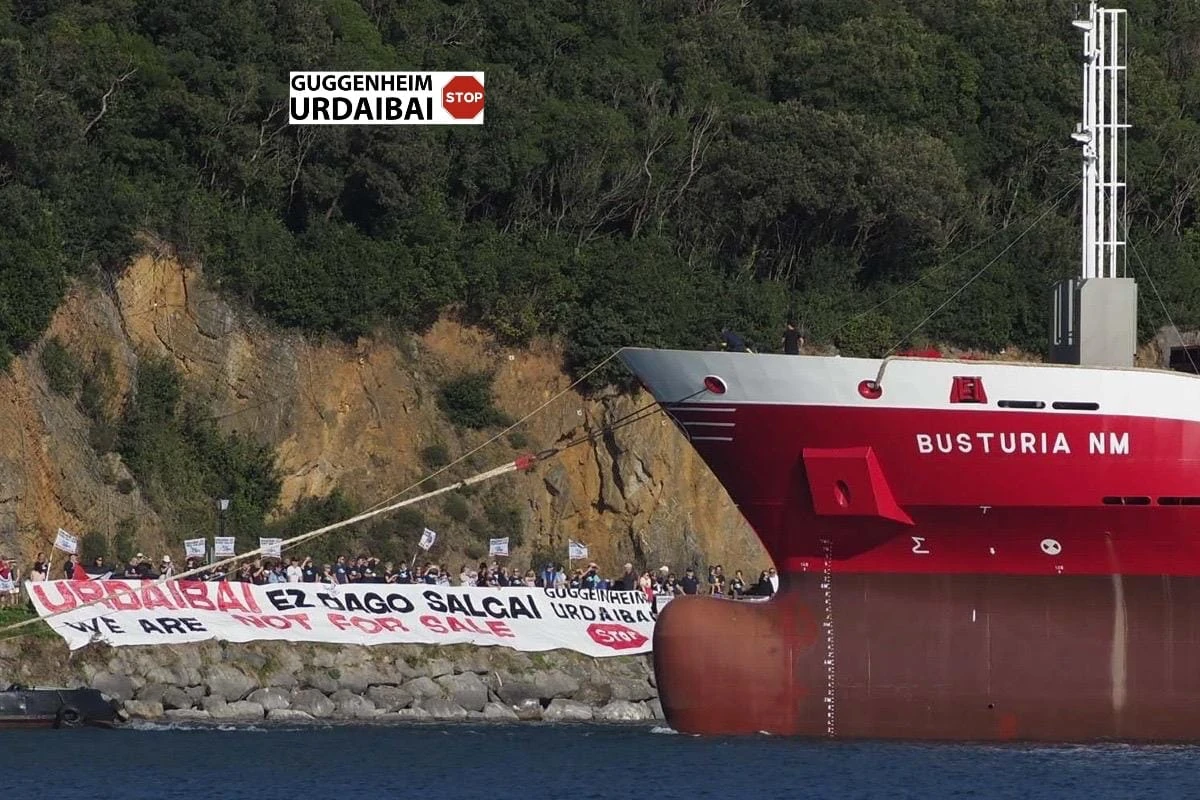
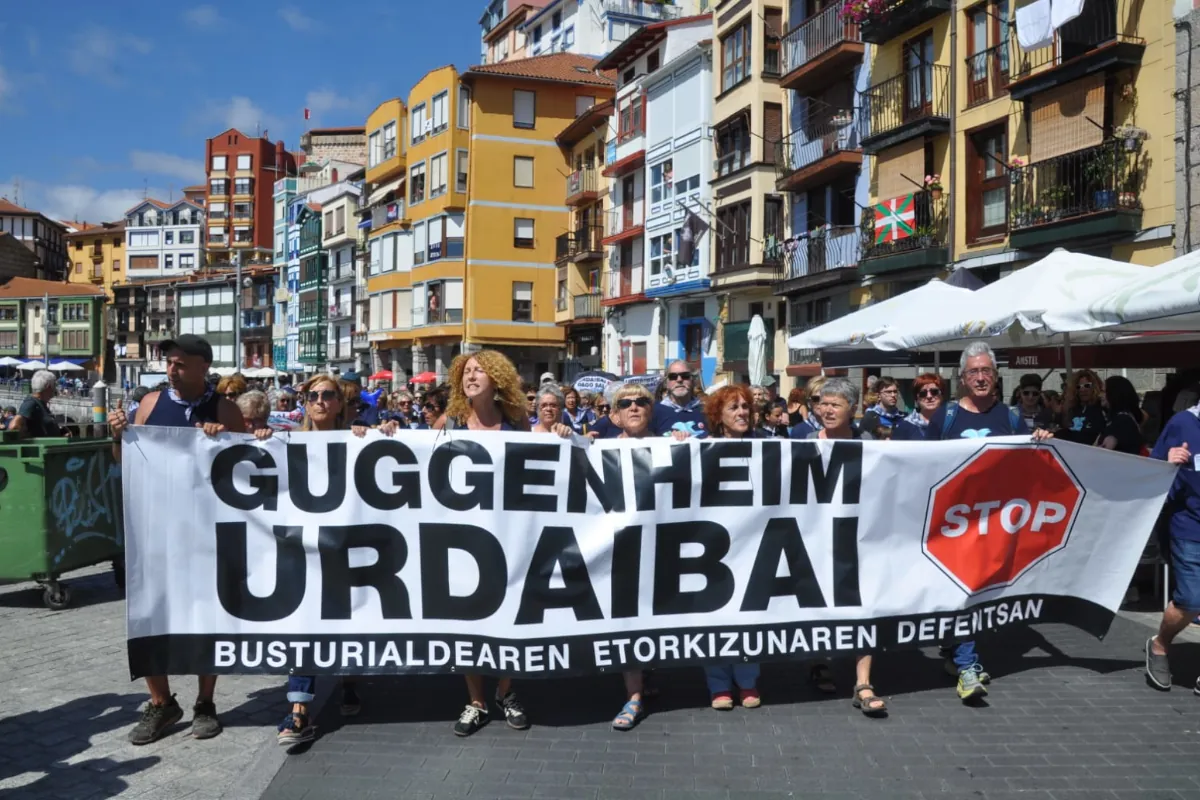
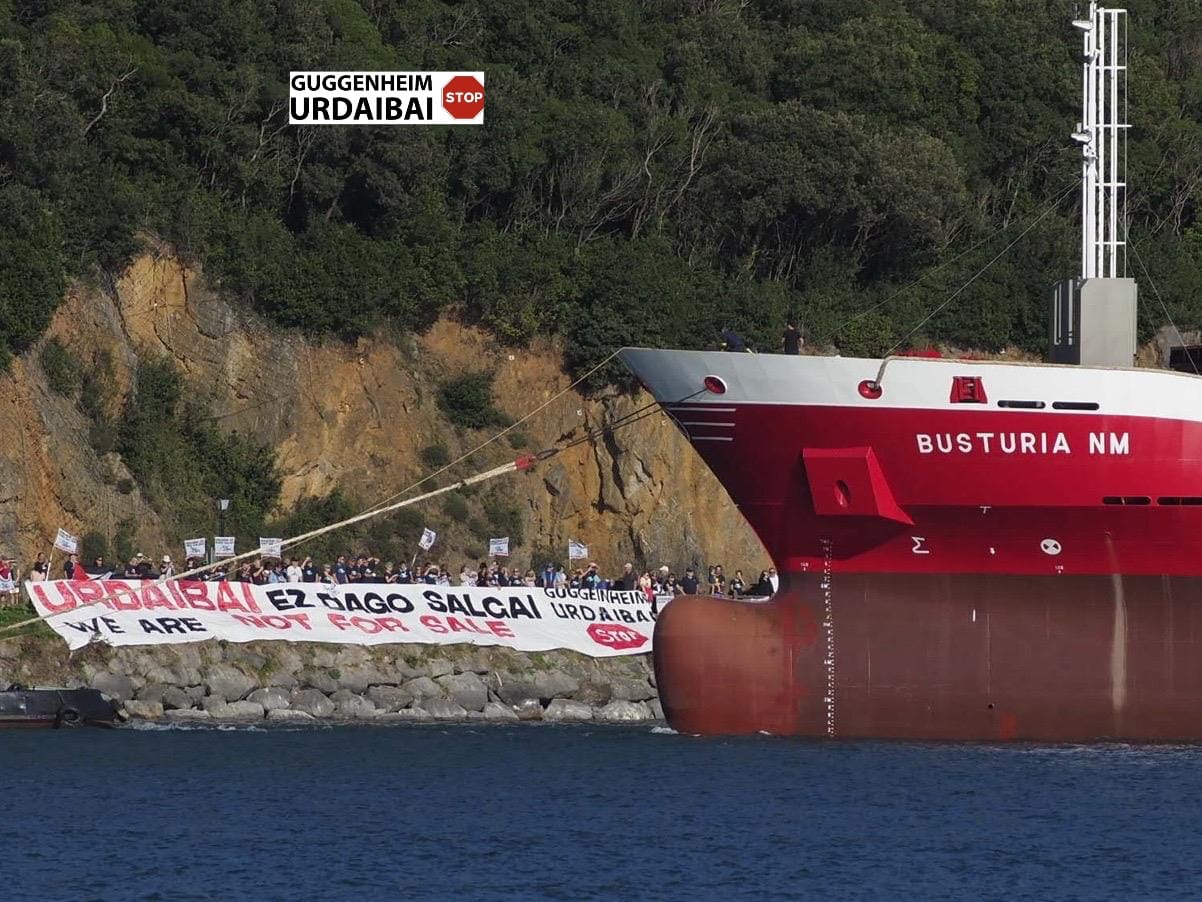
Everything seemed aligned to justify a profound transformation of land use. The public response was resounding.Thousands ofobjections submitted in December 2023 (still pending) to this draft of the General Urban Development Plan(PGOU) called into question not only the project’s feasibility but also its legal compatibility within a highly protected area. This was not an emotional opposition. It was a legal, environmental, and social warning.
Then came December 16, 2025, and the Guggenheim project was withdrawn. And along with that, the ongoing modifications to the Gernika-Markina Partial Territorial Plan and the Special Compatibility Plan signed by the mayors of Murueta, Gernika, and Forua with the Provincial Council lost their relevance. Thus, the element that had conditioned the planning disappeared. It is at this point that the narrative takes a turn that is difficult not to describe as opportunistic.The very space that was being reconfigured tomake the museum viable is reconsidered once again. The shipyard, which previously seemed incompatible with the future of the municipality, is now defended as an activity to be preserved. Talk of relocation is avoided. The discourse has changed once again.
Changing one’s mind isn’t the problem.What is worrying is the ease with which it changes and, above all, what that reveals. Because the conclusion is hard to avoid: the criteria has not been the territory, nor the regulations, nor the interests of the residents.The criteria has been the existence, or lack there of,of a specific project. Because if the planning was modified to make a specific project viable, it’s difficult to argue that the same plan is now free from any external influence. Rather, it seems the urban planning document has been adapted inline with the political priorities of the moment: first to accommodate a museum, now to justify its absence.
It’s not that changing criteria is illegitimate. What’s worrying is the lack of coherence in the criteria themselves. Everything points to a simple and unedifying logic: when there was a museum, the shipyard was superfluous; when the museum disappears, the shipyard becomes necessary again. That’s not planning. That’s opportunism!!
The General Urban Development Plan (PGOU) should be the document that establishes the medium- and long-term model for the municipality, a stable framework that gives coherence to decisions. But in this case, it has functioned more as a flexible instrument, capable of adjusting to changing priorities without any convincing explanation. And that has consequences, because it erodes trust in the institutions and in the very idea of planning.
In the end, what remains is not just the debate about a museum or a shipyard, rather the following uncomfortable question: who is Murueta’s future being designedfor? When urban planning decisions seem to respond more to external or circumstantial interests than to a solid municipal project, the feeling is that the territory becomes just another piece on a chessboard being moved from the outside. Perhaps the most striking thing of all is not the change of stance, but the apparent confidence that no one will remember it.But memory, in this case, is not at stake. The documents exist, the statements are published, and the decisions have been too clear to go unnoticed. Murueta doesn’t need urban planning that adapts to whatever project is currently in fashion. It needs coherence, rigor, and respect for a unique environment. Everything else, however much it’s disguised as planning, sounds more like improvisation and strategy.