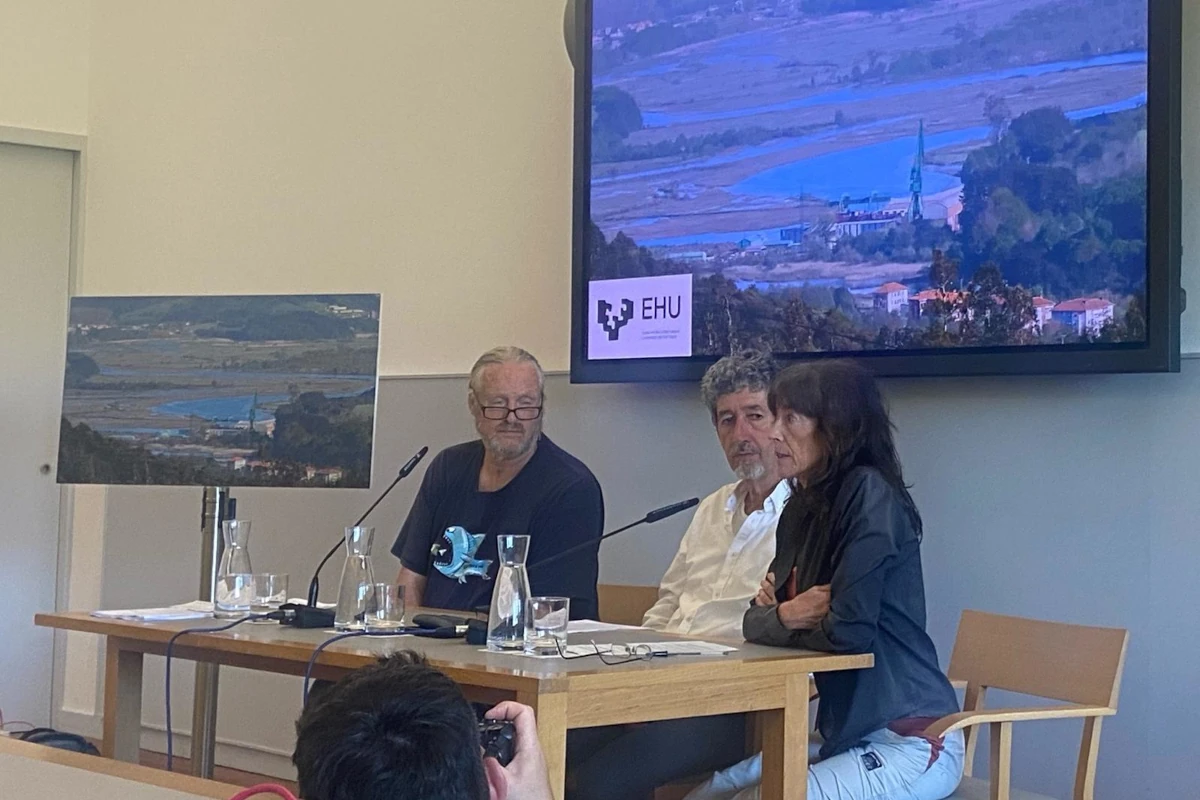
URDAIBAI: ARGUMENTS FOR AMENDING LAW 5/1989 THROUGH RIGOROUS DEBATE
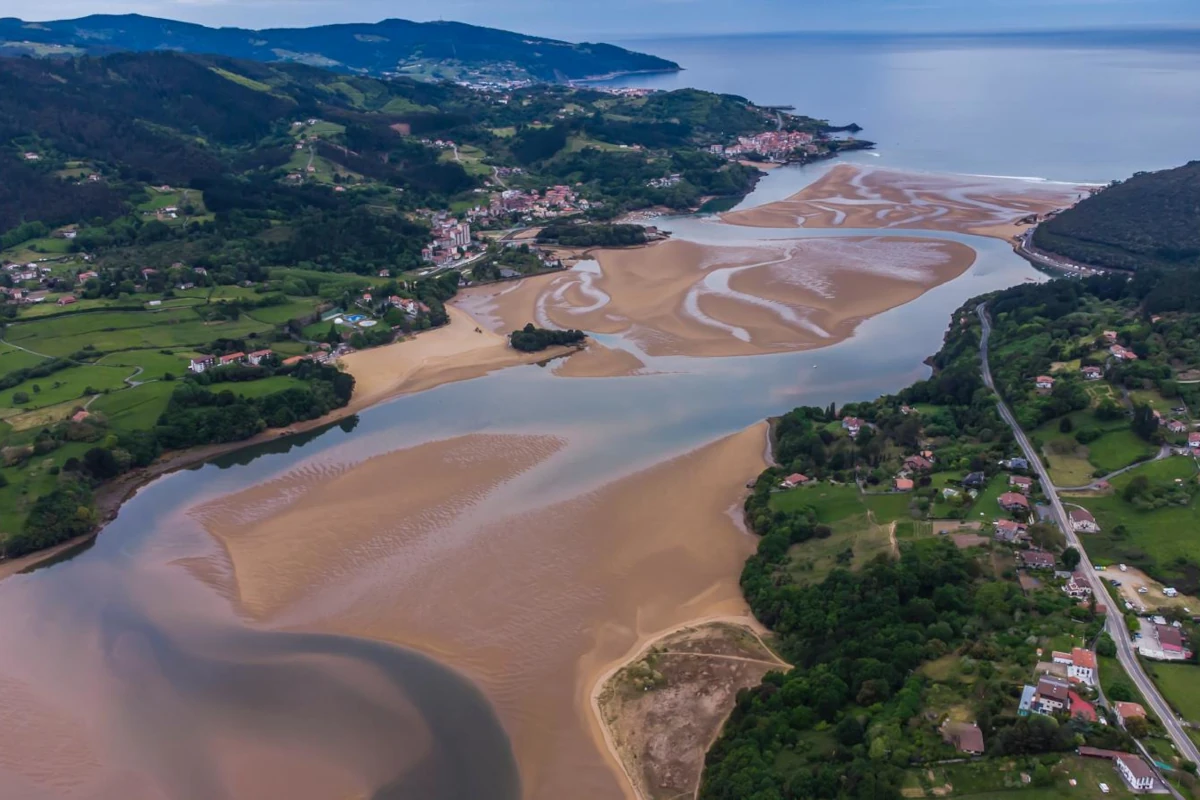
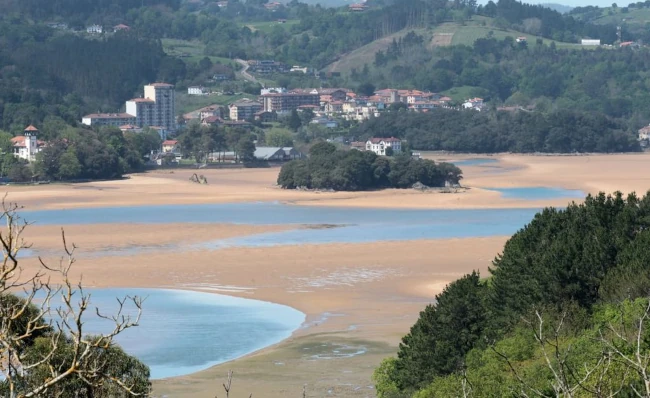
The Oka estuary is the main axis of the Urdaibai Biosphere Reserve and contains the most important habitats and biological communities in the area. It is a complex system, subject to natural factors that cause considerable variability in its conditions, both spatially — between
the inner and outer parts of the estuary, and between the central channel and the margins — and over time.
Given the importance of these natural values, the estuary has the highest level of protection under Law 5/1989 itself, as a Special Protection Area, alongside the coastline, Cantabrian holm-oak forests and areas of archaeological interest.
But the importance of Urdaibai goes beyond the scope of regional legislation. It is a Biosphere Reserve, a wetland of international importance under the Ramsar Convention, and includes two Special Protection Areas for Birds (SPAs/ZEPAs) and three Special Areas of Conservation (SACs/ZECs) under the Habitats Directive, within the Natura 2000 Network.
These protection designations are not merely formal declarations. They constitute objective recognition based on technical criteria and quantifiable indicators, demonstrating the area’s international importance. At the same time, these designations entail a commitment to conserve and improve the condition of the natural elements that justified their designation.
For this reason, any change that may affect the characteristics of these areas or the uses taking place within them must first assess its potential impacts on the natural environment, particularly its potential effects on the key elements that justified these protection designations.
However, the proposed bill contains no assessment or mention whatsoever of the impacts that the proposed changes may cause.
THE NEED TO MANAGE THE IMPACT OF HUMAN USE
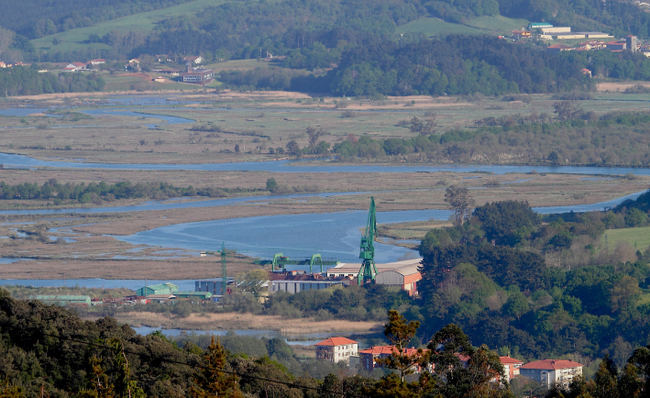
Urdaibai is also an area that has historically experienced a significant human presence. For centuries, agricultural and livestock activities have occupied and transformed estuarine habitats. Subsequently, certain industrial activities also affected the environment, by occupying areas that originally belonged to the estuary and causing pollution.
Today, there are extensive areas, such as Anbeko and Mallukitza, that were transformed and have since been completely or partially abandoned, with varying degrees of naturalisation. There are also areas of infill created by depositing materials resulting from dredging operations carried out in areas, such as San Kristobal and Axpe, formerly occupied by marshland. In addition, invasive exotic vegetation is currently an important factor contributing to environmental degradation in these areas.
All of this demonstrates that human activity has left a significant impact on Urdaibai and,
precisely for that reason, the area offers excellent opportunities for the restoration of lost or degraded habitats.
At the same time, natural areas are becoming increasingly attractive for recreation and leisure. Furthermore, it is increasingly common for various recreational and sporting activities to be considered more valuable when they take place in natural areas of high conservation interest or in protected natural areas.
This creates increasing pressure on the environment and, with growing frequency, generates conflict between the public use of natural areas and their conservation.
Urdaibai is no exception to this reality. In recent years, there has been a significant increase in the number of users of jet skis, kayaks, canoes and other vessels, both through activities managed by companies and through individual use.
It is therefore of utmost importance to regulate these activities. However, such regulation must always take one fundamental issue into account: Urdaibai’s international importance lies above all in its natural values, and those values cannot be put at risk as a result of inadequate management of human uses.
PRESSURES ON BIRDS AND SENSITIVE AREAS
The need to regulate human uses is not a theoretical issue. In the Oka estuary, it has been established that human presence associated with various activities — navigation, shellfish gathering, fishing, walking dogs, wildlife observation and so on — has a significant negative impact on birds. Birds are, precisely, one of the natural elements that contribute most to the system’s international importance.
A particularly significant example is the Eurasian spoonbill (Platalea leucorodia), a species of great international importance in Urdaibai. During the autumn migration period, in late summer and early autumn, it has been estimated that this species spends only around four hours in Urdaibai on average, largely as a result of disturbance caused by people carrying out various activities in the estuary, particularly in the central area.
With regard to navigation, moreover, the key issue is not simply whether or not a vessel has an engine. What is crucial is whether vessels can reach the areas that birds use for feeding and resting.
Indeed, shallow-draught vessels, which are usually non-motorised — canoes, kayaks or small rowing boats — are able to reach these sensitive areas, causing disturbance to birds and ultimately forcing them to flee.
For this reason, regulation of these activities should not simply focus on the use of motors; its objective should be to restrict access to the most sensitive areas, particularly the margins and inner areas of the estuary.
Therefore, the most appropriate measure for protecting these inner areas would be to prohibit access, except for very specific and justified purposes, such as research or restoration work.
P1.2 NEW AREAS
It is in this context that the proposal to create new zones within the estuary must be considered: “supratidal, intertidal or subtidal areas for nautical-recreational use”, identified by the designation P1.2.
The bill seeks to allow marine installations adapted to the landscape to be constructed in these areas, in order to enable recreational vessels to be moored, anchored and berthed, as well as allowing passengers to embark and disembark.
It is true that there are historically used areas in the Oka estuary for mooring, anchoring and berthing vessels, such as Portuondo and Arketa, and that today, at least during the summer season, they accommodate dozens or even hundreds of vessels.
But precisely for this reason, we must distinguish between areas where existing situations and uses are already established and areas where the introduction or facilitation of new uses is being proposed.
The Management and Use Plan for the Urdaibai Biosphere Reserve (PRUG), approved by Decree 139/2016 of 27 September, already provides, in Article 4.4.4.28, for the maintenance and repair of mooring points and jetties that existed before Law 5/1989 came into force, expressly referring to the Arketa and Portuondo areas.
Furthermore, it provides for certain activities necessary to organise established moorings in an orderly and continuous manner, thereby reducing the surface area of water occupied.
For this purpose, the PRUG itself provides for the approval of a Special Plan to delimit and regulate the area, establish the maximum number of authorised vessels and take into account, on the one hand, vessels that were permanently moored in the estuary when Law 5/1989 came into force and, on the other hand, in all cases, the capacity of the environment to assimilate these activities..
Therefore, in areas where there is genuinely existing demand and historical use, the problem is not necessarily the absence of regulatory instruments. What is needed is to properly apply the instruments that are already provided for.
It is necessary to organise these uses appropriately in order to minimise the occupation of space and their impact on the natural environment while, at the same time, ensuring that navigation is compatible with other uses, such as that of beaches and bathing.
But achieving this does not require expanding the authorised uses in these areas, and even less does it require introducing, through legislation, the possibility of constructing new marine installations.
The procedure provided for by the PRUG — namely, the preparation of the relevant Special Plan — is the appropriate instrument for organising these situations. For this reason, the expansion of the possibility of constructing new marine installations through the creation of new P1.2 areas is a cause for concern.
NOT ALL AREAS OF THE ESTUARY ARE THE SAME
This issue is particularly important because not all areas of the estuary have the same characteristics or the same environmental sensitivity.
The presence of a small number of moored vessels in other areas of the estuary should not automatically justify including those areas in the new P1.2 category or creating new areas within that category, particularly where they are located in highly sensitive environments, such as the central part of the estuary.
Law 5/1989 itself recognises this greater sensitivity and imposes significant restrictions on motorised navigation upstream from the mouth of the Mape River.
Therefore, the answer should not be to create new areas for recreational nautical uses that would barely respond to current demand while, at the same time, generating new pressures in particularly sensitive areas.
The response should be to regulate and optimise use in the areas that genuinely require it while, at the same time, avoiding encouraging access to areas where environmental sensitivity requires the opposite.
From this perspective, the P1.2 areas proposed at Telleria-Tejeria, Ozollo and in the cut-off area of the Forua-Kortezubi estuary do not meet the necessary conditions and are located in areas of high natural sensitivity.
Consequently, there is no justification for creating these new P1.2 areas: in some cases, existing uses and demand can be regulated through the procedures already provided for in the legislation, without the need to expand authorised uses; while in other cases, access by vessels to highly sensitive areas should not be encouraged, still less should the possibility of constructing new installations be permitted there.
TOWARDS RESTORATION-BASED MANAGEMENT
The fundamental issue should not be how to increase human uses of the estuary, but rather how to manage those uses without putting at risk the values that make Urdaibai an area of international importance.
Urdaibai contains areas that have been degraded as a result of the transformations the estuary has undergone throughout history. Some of these areas currently offer excellent opportunities to restore lost or damaged habitats.
Furthermore, we are in the United Nations Decade on Ecosystem Restoration, and the European Union Nature Restoration Regulation was recently adopted.
Urdaibai cannot remain outside the lead that administrations and institutions are taking internationally in the field of the natural environment.
On the contrary, the restoration of degraded areas must occupy a central place in the future management of the area. The concept of restoration should become an underlying guiding principle for the management of Urdaibai in the coming decades.
For this reason, it is important that any amendment to Law 5/1989 be developed from a global perspective and in accordance with the current reality of the area.
Amending the law may be necessary. But such an amendment should serve to strengthen protection, properly organise existing uses, prevent new pressures in the most sensitive
areas, and make progress in restoring degraded habitats.
Urdaibai needs management commensurate with its environmental importance. And any change made to its legal framework must start from that reality: we are dealing with an area of international importance, and its natural values are precisely the principal reason why it is protected.